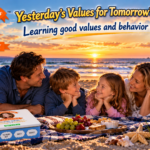
“Preparing children for the future means more than helping them succeed.
It means helping them develop the character to live that future well.”
By Dr. Gil, Creator of JeanieOlogy™
Parents and grandparents naturally want children to succeed.
We celebrate when they learn to read.
We help with homework.
We encourage them to study.
We applaud good grades, accomplishments, awards, and milestones.
We want them to receive a good education and eventually have opportunities to build successful, independent lives.
All of that matters.
But there is another question that may matter even more:
What kind of person will this child become?
Someday there won’t be a parent reminding them what to do.
Grandma and Grandpa won’t always be nearby to offer advice.
There won’t be a teacher grading every decision.
Children eventually become adults who must make choices for themselves.
Will they tell the truth when dishonesty would be easier?
Will they accept responsibility when they make a mistake?
Will they treat others with respect?
Will they show compassion?
Will they persevere when life becomes difficult?
Will they make decisions based on values rather than convenience?
Those qualities aren’t measured on most tests.
Yet they can determine much of what happens throughout a person’s life.
Information Is Everywhere—Wisdom Is Different
Today’s children have access to an astonishing amount of information.
Within seconds they can search for answers, watch educational videos, explore ideas with artificial intelligence, and communicate with people around the world.
Knowledge has become easier to access.
Wisdom hasn’t.
Wisdom develops through experience.
Good judgment develops when children learn to think about consequences.
Character develops through repeated choices.
These things take time.
They develop through thousands of seemingly ordinary experiences as children grow.
One conversation. One decision. One mistake. One lesson at a time.
The Life Skills Children Will Need
Think about the adult you hope your child or grandchild eventually becomes.
Academic knowledge will certainly be important.
But life will require much more.
Children also need to learn how to:
-
Communicate clearly and respectfully.
-
Listen before responding.
-
Solve problems thoughtfully.
-
Accept responsibility.
-
Work cooperatively with others.
-
Show empathy.
-
Handle disappointment.
-
Make ethical decisions.
-
Demonstrate gratitude and generosity.
-
Stand by their values when difficult choices arise.
These abilities will affect friendships, marriages, careers, families, leadership, and communities throughout adulthood.
And many of them are first practiced at home.
Parents Have a Classroom Called Everyday Life
Fortunately, parents don’t need to create formal lessons for every important life skill.
Everyday life provides plenty of opportunities.
A child helps prepare dinner.
Responsibility.
A sibling disagreement occurs.
Patience, communication, and forgiveness.
Someone in the neighborhood needs help.
Compassion.
A child wants to quit because something is difficult.
Perseverance.
A mistake is made.
Honesty and accountability.
Someone receives a gift.
Gratitude.
The challenge isn’t finding opportunities to teach values.
They’re everywhere.
The challenge is recognizing them.
Grandparents Bring Something Children Cannot Learn From a Textbook
Grandparents possess a resource that becomes more valuable with every passing year:
life experience.
They’ve experienced success and disappointment.
They’ve made good choices—and probably a few poor ones.
They’ve worked.
Saved.
Sacrificed.
Forgiven.
Started over.
Helped others.
And learned lessons that couldn’t have been understood when they were children themselves.
Those experiences can become extraordinary teaching tools.
A conversation about responsibility might become Grandpa’s story about his first job.
A discussion about perseverance might lead Grandma to describe a difficult period she once faced.
A question about honesty may remind either of them about a mistake they made years ago.
Children don’t simply hear a lesson.
They hear their family’s story.
Don’t Protect Children From Every Mistake
Parents and grandparents naturally want to protect children.
But sometimes small mistakes provide valuable opportunities to learn.
A child spends all of their allowance immediately and later wishes they hadn’t.
That can become a lesson about planning.
A child doesn’t prepare for something and experiences a disappointing result.
That can become a lesson about responsibility.
A child says something hurtful and damages a friendship.
That can become a lesson about words, consequences, and forgiveness.
We don’t have to remove every consequence.
Sometimes our role is to help children understand what happened.
Ask:
“What do you think you could do differently next time?”
That’s how experience begins becoming wisdom.
JeanieOlogy™ Creates a Place to Practice Thinking
Many important decisions children will face haven’t happened yet.
That’s another reason conversation matters.
Children can practice thinking before they have to make the real decision.
JeanieOlogy™ helps families create those opportunities.
Each card begins with a Giggle Moment, bringing imagination, creativity, laughter, and family interaction into the experience.
Then comes Aunt Jean’s Question.
Children are encouraged to think about honesty, kindness, responsibility, courage, gratitude, respect, compassion, perseverance, relationships, and other qualities associated with strong character.
But instead of listening to another lecture, children participate.
They think.
They respond.
They ask questions.
They hear other perspectives.
They explain what they believe and why.
Those conversations give children practice using the communication and decision-making abilities they’ll need throughout their lives.
Ask “Why?” More Often
Suppose a child says:
“You should always be honest.”
That’s wonderful.
But don’t necessarily stop there.
Ask:
“Why?”
Or perhaps:
“What if telling the truth gets you into trouble?”
Now the child has to think more deeply.
If the subject is generosity:
“Why should we help someone who can’t do anything for us in return?”
If it’s responsibility:
“What happens when people don’t do what they’ve promised?”
If it’s respect:
“Can you respect someone even when you disagree with them?”
These questions move children from repeating a rule toward understanding the principle behind it.
Your Family’s Values Become Their Foundation
Every family has something it hopes to pass to the next generation.
Perhaps your family places particular importance on honesty.
Faith.
Service.
Generosity.
Responsibility.
Respect.
Perseverance.
Compassion.
Gratitude.
Whatever those values are, children need opportunities to hear about them, see them demonstrated, and eventually practice them themselves.
JeanieOlogy™ allows parents and grandparents to guide discussions according to their own family’s beliefs, traditions, experiences, and priorities.
Questions can also be expanded, modified, occasionally skipped, or created specifically around something happening within the family.
Your family remains the teacher.
What Does Real-World Success Look Like?
We often define children’s success through achievements.
Grades.
Degrees.
Careers.
Income.
Awards.
Those accomplishments can certainly be worth celebrating.
But imagine another definition of success.
Your child grows into an adult whom others can trust.
Your grandchild treats people with kindness.
They work hard even when nobody is watching.
They admit mistakes.
They keep promises.
They help someone who needs them.
They remain grateful when life goes well and resilient when it doesn’t.
They know what they believe—and have the courage to live accordingly.
Wouldn’t those accomplishments be worth celebrating too?
The Lessons That Last
Years from now, children may forget many individual assignments and test scores.
But they may remember something Dad told them after they made a mistake.
They may remember Grandma explaining why gratitude mattered in her family.
They may remember Grandpa telling them about a time when he had to make a difficult decision.
They may remember Mom asking:
“What do you think the right thing to do is?”
And perhaps most importantly, they’ll remember that the adults in their lives cared enough to prepare them not simply for their next achievement—
but for life.
Because eventually children must make their own decisions, build their own relationships, face their own disappointments, and determine what kind of adults they want to become.
We cannot make every decision for them.
But we can help build the foundation from which those decisions will someday be made.
That may be one of the greatest gifts a parent or grandparent can give.
© Copyright Aunt Jean’s Kids, LLC. All Rights Reserved.