
One of the comforts of homeschooling is being present for so much of a child’s learning.
When a math problem becomes confusing, you’re there.
When instructions aren’t understood, you’re there.
When a disagreement happens, you’re often nearby.
When a child has a question, an adult they trust may be only a few steps away.
But there is an important reality every parent eventually faces:
You won’t always be there.
Children grow.
Their world becomes larger.
They spend more time with friends. They participate in activities. They encounter new people and new ideas. Eventually they become teenagers and then adults.
And somewhere along the way, the questions change.
Instead of:
“What does Mom or Dad want me to do?”
the question becomes:
“What do I believe is the right thing to do?”
Helping children prepare for that moment may be one of the most important responsibilities we have.
Rules Are Important—but Rules Aren’t Enough
Children need rules.
Don’t run into the street.
Tell the truth.
Finish your responsibilities.
Treat people respectfully.
Don’t take something that doesn’t belong to you.
Rules establish boundaries and expectations.
But as children mature, they need to understand something deeper:
Why does the rule exist?
A child who behaves only because a parent is watching may behave very differently when the parent leaves the room.
A child who understands the value behind the rule begins developing an internal guide.
Instead of simply thinking:
“Mom said not to lie.”
the child gradually begins thinking:
“Honesty matters because people need to be able to trust me.”
That is an important transition.
Good Judgment Develops Through Practice
We wouldn’t expect a child to become a good reader without practicing reading.
We wouldn’t expect a child to become good at mathematics without solving problems.
Decision-making works much the same way.
Children need opportunities to think through choices.
Start with simple situations:
“Your friend forgot his lunch. What could you do?”
“You found something that doesn’t belong to you. What should happen next?”
“Someone asks you to keep a secret that makes you uncomfortable. What would you do?”
“Your friends are making fun of another child. What choices do you have?”
These aren’t merely questions.
They are practice for real life.
Ask Before Telling
Adults have experience.
We often know immediately what we believe the correct answer should be.
That makes it tempting to tell children exactly what to do.
Sometimes that’s necessary.
But other times, try asking first:
“What do you think?”
Then listen.
Follow with:
“Why?”
Those two questions can reveal a great deal.
Perhaps your child already understands the situation well.
Perhaps they see something differently.
Perhaps they haven’t considered the consequences.
Perhaps they are worried about what friends might think.
Perhaps they simply need guidance.
By listening first, parents can teach the lesson the child actually needs rather than the one we assumed they needed.
Choices Often Involve Competing Values
Real-world decisions aren’t always easy.
Sometimes two good things compete.
A child wants to be loyal to a friend—but the friend has done something dangerous.
A child wants to be kind—but also needs to establish a boundary.
A child wants to help someone—but has already made another commitment.
A child wants to tell the truth—but knows the truth may disappoint someone.
These situations require more than memorizing rules.
They require judgment.
Parents can help children think through questions such as:
“Who could be affected by this choice?”
“What might happen afterward?”
“Would you make the same choice if everyone knew about it?”
“Would you feel comfortable telling your family what you decided?”
Questions help children slow down and think.
Peer Pressure Changes the Equation
Many choices become harder when friends are involved.
A child may know exactly what the family expects—and still hesitate because they want to fit in.
That makes peer pressure worth discussing before it happens.
Ask:
“What would you do if your friends wanted you to do something you knew was wrong?”
Don’t stop with:
“I’d say no.”
Ask:
“What could you actually say?”
Now practice it.
“No thanks.”
“I don’t want to.”
“I’m not doing that.”
“Let’s do something else.”
“I need to go.”
Knowing what to say can make it easier to act when the real moment arrives.
Teach Children That Leaving Is a Choice
Children sometimes imagine they must solve every uncomfortable situation.
They don’t.
Sometimes the best decision is simply to leave.
Walk away from the argument.
Leave the room.
Don’t respond to the message.
Move away from someone behaving badly.
Call a trusted adult.
Ask for help.
Teaching children when to remove themselves from a situation is part of teaching judgment.
JeanieOlogy™ Provides a Safe Place to Practice
One of the strengths of JeanieOlogy™ is that children can think about situations before they have to face them.
A card can begin a conversation without the child feeling as though they are being lectured or disciplined.
Imagine asking:
“If your best friend asked you to lie for them, what would you do?”
Or:
“Would you do something wrong if you knew nobody would ever find out?”
Or:
“What would you do if everyone in your group disagreed with you?”
Or:
“How do you know when you should ask an adult for help?”
The child gets to think.
The parent gets to listen.
And together they can explore the reasons behind the answer.
The Giggles Matter Too
Not every family conversation needs to feel serious.
JeanieOlogy™ combines Aunt Jean’s Questions with fun Giggle Moments for a reason.
Children may laugh one minute and discuss something meaningful the next.
That relaxed atmosphere can make conversations feel less like instruction and more like family interaction.
Sometimes the best conversations happen when nobody announces:
“We’re going to have an important conversation now.”
They simply happen.
Talk About Decisions You’ve Made
Parents can make these lessons more meaningful by sharing age-appropriate experiences from their own lives.
Perhaps you once followed friends into a poor decision.
Maybe you stood up for someone.
Perhaps you had to admit something difficult.
Maybe you made a financial choice you later regretted.
Perhaps you walked away from a situation that didn’t feel right.
Tell your child what happened.
Then explain what you learned.
Children benefit from knowing that good judgment often develops through experience—and adults haven’t always made perfect decisions either.
Teach the Pause
One simple habit can prevent many poor decisions:
Pause before acting.
Children can learn to ask themselves:
Is this safe?
Is it honest?
Could someone be hurt?
Would I be comfortable telling my parents about it?
Does this fit the kind of person I want to be?
That pause creates space between impulse and action.
And within that space, judgment can grow.
Freedom and Responsibility Grow Together
As children demonstrate good judgment, they can gradually receive more independence.
That is an important lesson itself.
Freedom isn’t simply something that arrives with age.
Often it grows alongside responsibility.
When children show they can handle small decisions wisely, parents become more comfortable allowing larger ones.
The child begins to understand:
“Being trusted means I have a responsibility to make good choices.”
Homeschooling Gives Families Time to Prepare
One of the advantages of homeschooling is the opportunity for conversations that might otherwise be rushed.
During lunch.
In the car.
On a walk.
While cooking.
During a family game.
After something happens in a book, movie, or real life.
These moments allow parents to explore not only what happened, but:
“What would you have done?”
That’s preparation for independence.
Someday the Answer Will Be Theirs
Parents spend years answering questions.
Explaining.
Correcting.
Encouraging.
Protecting.
Teaching.
But eventually there comes a moment when the parent isn’t standing beside the child.
There is no answer key.
No teacher.
No immediate reminder.
Just a decision.
And the values that child has carried into the moment.
That’s why conversations today matter.
JeanieOlogy™ gives homeschool families another way to have those conversations while there is still plenty of time to ask questions, consider choices, laugh together, make mistakes, and learn.
Because the ultimate goal isn’t raising children who always need us to tell them the right answer.
It’s helping them become young people who can eventually ask themselves:
“What is the right thing to do?”
And have the character and judgment to act upon the answer.
JeanieOlogy™ — Yesterday’s Values for Tomorrow’s Children.
© Copyright Aunt Jean’s Kids, LLC. All Rights Reserved.

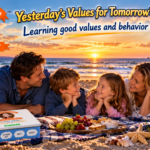 One of the greatest benefits of homeschooling is the freedom to teach not only academic subjects but also the values and character traits that help children become caring, responsible adults. While textbooks teach facts, many of life’s most important lessons are learned through meaningful conversations. JeanieOlogy™ was created to make those conversations enjoyable. Designed for… Read more: Week 2-HS-Article- Making Values Come Alive in Your Homeschool